

.avif)
.avif)
.avif)
Blog

.avif)
Recent Articles
Fresh insights on web design, development, and digital strategy to help you build smarter.

Not sure if your website is quietly holding your business back? This guide breaks down the key signs, from technical performance and UX to content and positioning, to help you make a strategic decision about whether a redesign is right for your business in 2026.
April 2, 2026
•
1 mins read
.avif)
Sometimes, the most significant problems with a website aren't immediately obvious. They reveal themselves through high bounce rates, low conversion figures, or the sense that your site no longer reflects the business you've become. At the same time, asking "Do we need a new website?" isn't simply a question of aesthetics or functionality. It's a strategic consideration about growth, positioning, and future-readiness.
This guide is here to help unpack that question, offering a framework for determining whether your current site is quietly holding your business back, and what to do if it is.
Across industries, businesses at every stage of growth are reevaluating how their websites support their goals. In 2026, a modern website is no longer a luxury or cosmetic enhancement. It's a strategic necessity. Whether you're running a startup, a professional service, or a growing e-commerce business, the performance and alignment of your digital presence can significantly impact your growth trajectory.
Key Takeaways
- A website that looks fine on the surface can still be silently costing you leads, search visibility, and credibility if it's not strategically aligned with your business goals.
- Technical foundations like speed, mobile responsiveness, and platform architecture are now the baseline, not the bonus. If your site takes more than 3 seconds to load, over half your mobile visitors are already gone.
- Content that talks about your business instead of to your audience creates friction. Every word on your site should answer one question: "Why you?"
- Your competitors are investing in better websites right now. If your site still looks and feels like it was built in 2018, perception alone is costing you business.
- The cost of not redesigning is real: lost credibility, poor search rankings, slower internal workflows, wasted ad spend, and increased security risk.
Strategic Clarity: What Role Should Your Website Play?
Design alone no longer cuts it. A visually appealing website without strategic depth is like a shopfront with locked doors. Your website should guide users through a clear, engaging journey while reinforcing brand value and trust. To assess whether your current site is performing its job, ask if it's contributing to revenue generation, supporting customer acquisition, and reinforcing your market positioning.
For many businesses, especially in the small business sector, websites remain underutilised assets. They're built and left to sit stagnant, lacking iteration, insight, or intentionality. Marketing website design needs to begin with the end in mind: what actions do we want visitors to take, and what behaviours are we guiding?
In essence, a high-performing website is not merely a destination; it is a platform. It's a dynamic part of your brand's ecosystem, designed to grow with your objectives.
Technical Foundations: Is Your Platform Built for Growth?
Speed, stability, and scalability are now non-negotiables. Data shows that over 53 per cent of mobile users will abandon a page that takes longer than three seconds to load. That's not a minor detail. It's the difference between a customer converting and a missed opportunity.
Older content management systems, legacy plugins, and outdated hosting infrastructure all contribute to sluggish performance and higher bounce rates. Worse still, these technical limitations impact your search visibility. Google prioritises mobile-friendly, high-speed websites. If your current platform lags, you'll be harder to find and easier to forget.
This is particularly critical for businesses considering small business website development or rebuilding a site that was created several years ago. Today's web development company standards have undergone significant changes. React-based architecture, headless CMS solutions, and platforms like Webflow now enable faster, more secure, and more flexible builds.
Webflow in particular has evolved significantly heading into 2026, with real-time collaboration in the Designer, enterprise CMS scaling up to 1 million items, GSAP-powered interactions, built-in localisation for multilingual sites, and native analytics via Webflow Analytics. For Melbourne businesses evaluating a website redesign, it's worth understanding what modern platforms can now offer compared to what you're currently running.
These tools also allow your marketing team to respond quickly to changes without bottlenecks from developers.
When we talk about modern website design, we're also talking about sustainability: how well your site can evolve, integrate new tools, and support your team's workflow. If your website breaks when you try to update a product or takes weeks to add a new landing page, it's not supporting your growth. It's stalling it.
The User Experience Question: Are People Actually Staying?
In digital interactions, first impressions are formed almost instantly. If users are confronted with confusing navigation, dated visuals, or unclear value propositions, they tend to leave. And they rarely return. Your bounce rate tells a story. It's worth listening.
Visitors should be able to quickly orient themselves. They should be able to find what they're looking for with minimal effort. They should understand who you are, what you offer, and why it matters, all without scrolling endlessly or hunting through cluttered menus.
Responsive design is no longer optional. With more than half of web traffic coming from mobile devices, mobile-friendliness should be a baseline requirement. Yet many sites still deliver inconsistent experiences across devices. Working with a UX UI design agency ensures that your layout adapts fluidly, regardless of screen size or device type.
User experience also means tone, language, and clarity. If your content sounds like corporate jargon or doesn't reflect your users' needs, it creates friction. A frictionless, human-centred experience increases dwell time, boosts trust, and encourages action.
Content That Connects: Are You Saying the Right Things?
The most beautiful interface in the world is meaningless if the message isn't right. Your content must reflect your audience's challenges, priorities, and language. Many businesses unintentionally focus on themselves: features, history, internal accolades, without addressing what their customers truly care about.
Content should not be filler. It should be strategic, story-driven, and informed by real user needs. Whether it's a homepage headline, a services page, or a product description, every word should clarify, not complicate. Your messaging must answer the question, "Why you?" and do so with confidence and empathy.
And content shouldn't be static. As your business grows, so should your site. Blog posts, case studies, product updates, and FAQs all contribute to search visibility and user engagement. Investing in fresh, purposeful content helps reinforce your market relevance. If your website hasn't been optimised for relevant queries such as "small business website design" or "web application development", you're likely missing out on organic traffic.
Analytics and Evidence: Are You Making Informed Decisions?
Gut instinct only gets you so far. If you aren't tracking how people interact with your website, you're flying blind.
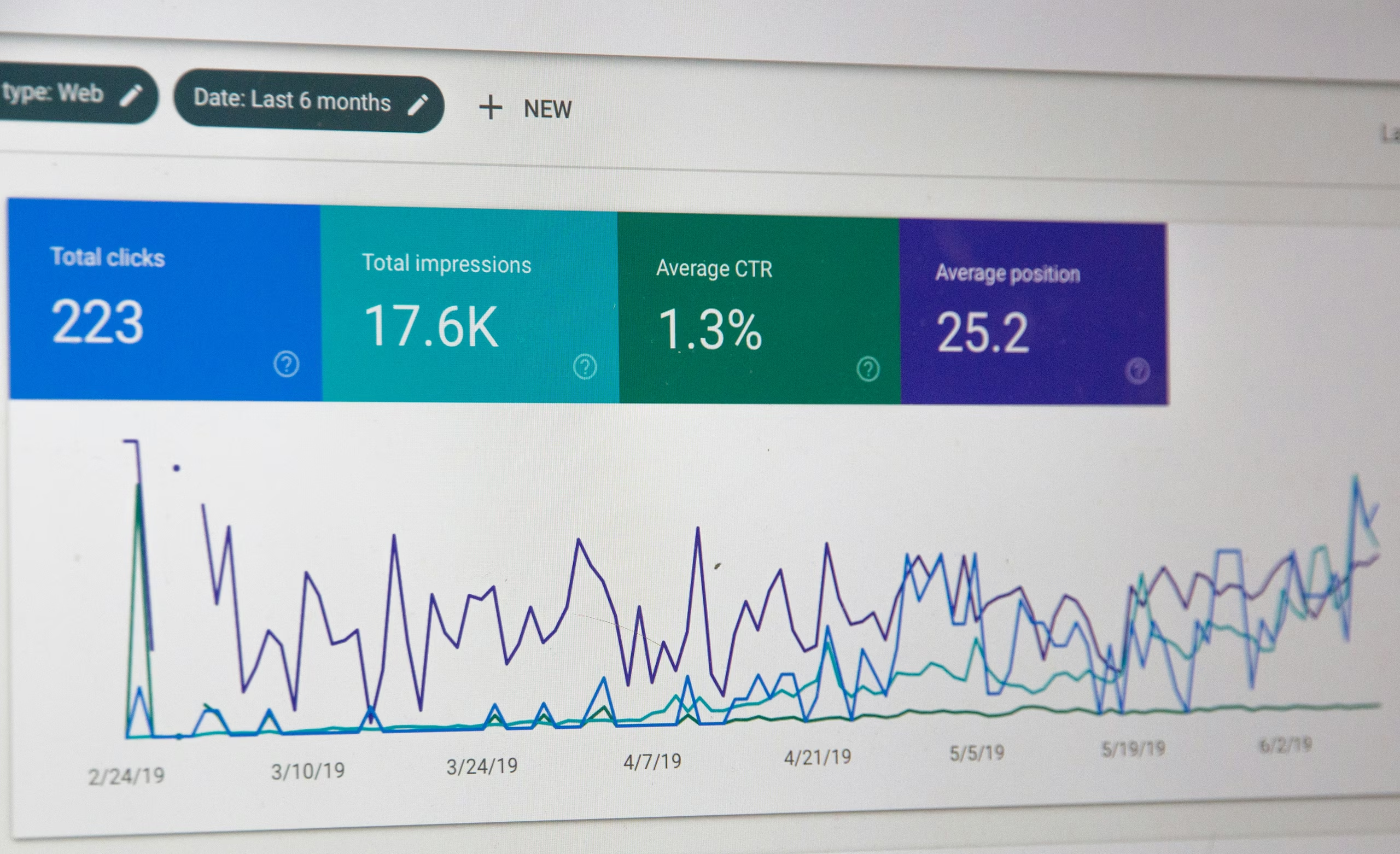
Meaningful analytics go beyond page views. You need to understand where people click, how far they scroll, when they drop off, and what content resonates with them. These insights help you refine user journeys, prioritise improvements, and calculate return on investment.
For example, if 80% of visitors bounce from your services page, that's not a good signal. If no one clicks your contact button, that's another. A well-configured analytics setup, including tools like Google Analytics 4, Microsoft Clarity, or Tag Manager, can give you a clear picture of what's working and what's not.
In website redesign services, this data-driven approach is fundamental. It's what transforms a subjective "look and feel" project into a results-oriented initiative.
Competitive Positioning: Are You Keeping Pace or Falling Behind?
Your competitors are not standing still. The market is evolving, and digital is often the first battleground.
Businesses that prioritise branding and conversion-focused web design as part of their strategy stand out. They're building authority. They're telling clearer stories. They're showing up where their customers search.
If your closest competitors have launched fast, intuitive sites with polished messaging and yours still looks like it was built in 2018, you're not just outdated. You're at a disadvantage. In competitive industries, perception matters. Trust is built online, and your website is the handshake before the handshake.
A website redesign company in Melbourne that prioritises market research knows this well. Your website should reflect what differentiates you, answer your audience's unspoken objections, and deliver a brand experience that feels cohesive across touchpoints.
Internal Workflows: Is Your CMS Supporting or Slowing You?
One of the most overlooked reasons for a redesign is internal frustration. If your content management system (CMS) is clunky, unintuitive, or overly dependent on developers, your marketing initiatives suffer.
Webflow website design, as a leading approach in this space, offers a solution. It combines design flexibility with user-friendly editing and integrates easily with modern marketing stacks. This makes it particularly effective for small business website development, where agility and budget-consciousness are key. With 2026's updates bringing real-time collaboration, native analytics, and expanded CMS capacity, Webflow has become even more capable for teams that want to move fast without breaking things. Ongoing website maintenance becomes part of the rhythm, not a bottleneck.
Whether it's a simple landing page or a dynamic web application, the tools you use to update and manage your site should enable action, not delay it. If you're weighing your options, a Webflow agency in Melbourne can help you assess whether a platform migration makes sense for your situation.
What Happens If You Don't Redesign?
It's worth considering the cost of inaction. An outdated website can:
- Undermine credibility with new visitors
- Fail to appear in search results
- Diminish the effectiveness of your paid campaigns
- Slow down internal workflows
- Increase security risks
For many organisations, the decision to redesign doesn't come down to vanity. It comes down to performance, efficiency, and opportunity cost.
Website redesign services are not just about visual improvement. They're about better alignment with your brand, clearer messaging, improved performance, and future-readiness. See how we approached this for Redline Cyber Security and Nealon Insulation.
What Does a Website Mean in 2026?
In 2026, a website is not just a digital asset. It's a central hub of communication, conversion, and customer experience. It ties together branding, sales, service, and strategy.
Small businesses, in particular, stand to benefit from investing in smarter, more responsive platforms. Whether you're a team of three or thirty, your site should amplify your strengths, not hide them. Your website should work harder, communicate clearly, and evolve faster.
If your current site isn't doing that, it may be time to rethink its role. And whether you go with a Webflow agency, internal development, or an external web development company in Melbourne, the goal remains the same: build something that grows with you.
This is not about chasing trends. It's about creating a foundation for long-term, scalable digital performance.
Because in a digital-first world, a great website isn't optional. It's expected. Book a free discovery call to find out where you stand.
Try a different keyword or browse by category.
Learn
Practical tips for growing your business through better websites
.avif)

Experts
Thoughts and perspectives from Pinecone team and leaders shaping digital

.png)

Free Website Audit Guide
Review your site in 15 minutes with a simple and free checklist.
- 5-second homepage test
- Printable scorecard
- No tech skills needed


.svg)