

.avif)
.avif)
.avif)
From Early-Stage Startup to Acquisition-Ready: How Pinecone Agency Transformed Catch’s Digital Presence
Catch was not just selling a cybersecurity tool. They were selling peace of mind to seniors. They needed a digital presence that could earn that trust from day one and turn it into real business value. The result was a website that converted users, opened partnership doors, and contributed directly to their acquisition in 2024.
What the Client Says
Building a website with Pinecone felt more like a team project than a client-contractor relationship. They listened to our ideas, collaborated on every decision, and gave us an outstanding final product. Would definitely use them again on the next project.
— Daniel Greenblum • Catch • Australia
The Challenge
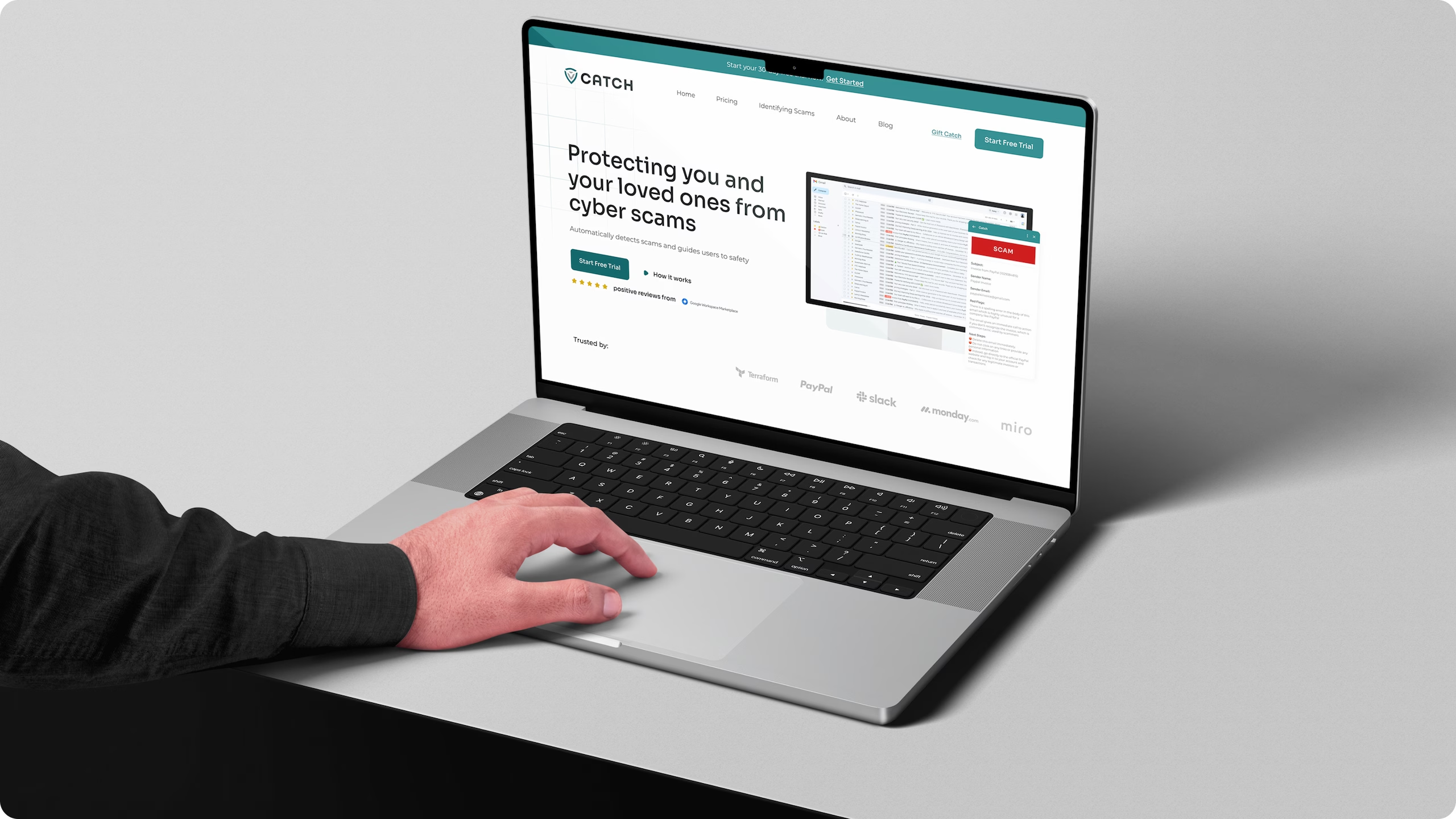
Catch had built something genuinely valuable — a Gmail plugin that detects scam emails in real time, protecting users from phishing and malicious links. Their primary audience was seniors. In consumer cybersecurity, especially for a vulnerable demographic, the product is only half the story. The other half is trust. Catch's website was not building any. The site lacked a clear conversion path, had no SEO foundation, explained benefits in technical jargon instead of plain language, and featured generic design that didn't feel safe to seniors.
There was no blog, no way to build authority, and no clear path from landing the page to installing the plugin. The design looked like any other security product, not specifically built for people who needed reassurance, not features.
For a product built around protecting people, the website was actively undermining that message.
.avif)
.avif)
The Approach
Catch was not selling software — they were selling safety. Seniors don't evaluate cybersecurity like corporate IT teams. They ask one question: can I trust this? Every decision was built around answering that question as quickly and clearly as possible.
- Lead with plain, reassuring language instead of technical jargon
- Demonstrate credentials and how the plugin works before asking for installation
- Build authority through educational articles and podcasts that show genuine expertise
The visual direction had to feel warm, clean, and credible — not techy, not intimidating. We created something specifically built for this audience: clear layouts, accessible language, and obvious next steps at every decision point.
Mobile responsiveness was a core requirement, not an afterthought. Catch's audience accessed the site on phones and tablets. Every element was designed to be easy to read and simple to tap on any device.
The site was built in Webflow with a blog platform that lets Catch publish independently. Educational content was core to the trust strategy.
- Webflow CMS blog with structured fields for articles and podcasts
- Schema markup and semantic HTML for search visibility
- Google Analytics, Clarity, and Tag Manager configured from day one for visitor insights
Technical Deep-Dive

Blog and Educational Content Platform
Built as a trust engine, not just a traffic tool. The Webflow CMS supports articles, podcasts, and guides with structured fields for consistent formatting. The Catch team publishes independently without design help. Every piece of content reinforces credibility with both readers and search engines — bringing the right visitors back.

Conversion Optimisation
The site was designed around one primary action: installing the plugin. CTAs were placed at key moments in the user journey, written in plain language that matched the audience's mindset. The plugin demo was central to the homepage — letting visitors see exactly what they were installing before committing to anything.
.svg)
Analytics and Tracking
Google Analytics, Microsoft Clarity, and Google Tag Manager configured from launch. Clarity provided heatmaps and session recordings showing where seniors engaged, where they hesitated, and what was working. This data made the site refinable over time — built to be understood and improved, not just launched.

Mobile-First Build
Seniors access the internet primarily on tablets and phones. Every text size, button target, and navigation flow was designed for a small screen first. A senior finding Catch on their iPad needed to read, understand, and install the plugin without friction. Mobile was the primary experience throughout — not an afterthought.
.avif)
.avif)
Results and Impact
The impact of the new website was immediate and significant. Catch went from no online presence to hundreds of website visits within the first three to four months.
THE RESULT
From zero online presence to acquisition. A trust-first website that built the credibility, user base, and brand equity that made Catch a market-ready business.
The acquiring team in 2024 was not just evaluating Catch's technology. They were evaluating the trust equity built into its brand and digital presence.
Immediate Traction from Zero
Within three to four months of launch, the site received hundreds of visitors and converted them into active users. The frictionless download path, clear SEO foundation, and trust-building content turned curious visitors into plugin users while opening doors to partnership enquiries.
Mobile Turned Traffic into Users
The mobile-first build proved critical. Catch's audience accessed the site from phones and tablets. Because the site worked beautifully on every screen size, the traffic actually converted. Seniors who found Catch through Google on their tablet could install the plugin in a few simple steps.
Trust Equity That Supported the Acquisition
In 2024, Catch was acquired. The acquiring team evaluated not just the code, but the trust equity built into the brand. A cohesive identity, clear mission communication, and a site that felt credible to a vulnerable audience helped prove that Catch was a market-ready solution with a loyal user base.
Key Takeaway
In cybersecurity for seniors, trust is not a feature — it is the product. Seniors are not evaluating software specifications. They are deciding whether to let something into their inbox. That decision is entirely based on how safe and credible the product feels.
Catch's website converted that trust into users, attracted partners, and built the equity that supported acquisition. A website built for the right audience, in the right way, becomes one of the most valuable assets a business owns.
Building a product for an audience that needs to trust you first?
Let's talk about how Pinecone Agency can build a digital presence that earns that trust and turns it into growth.

