A new website and email flows for a one-product skincare brand
CalScale makes a urea and lactic acid cream for dry, rough and scaly skin. Pinecone Agency redesigned CalScale's website and built it as a custom Shopify theme, live from 23 April 2026, then built 20 emails across six Klaviyo flows, live from 18 August 2026.
Overview
The challenge
CalScale's cream comes in two sizes, 100g and 220g, and sells on its own website and through pharmacies and clinics around Australia. The brand explains what's in the cream and how to use it in detail.
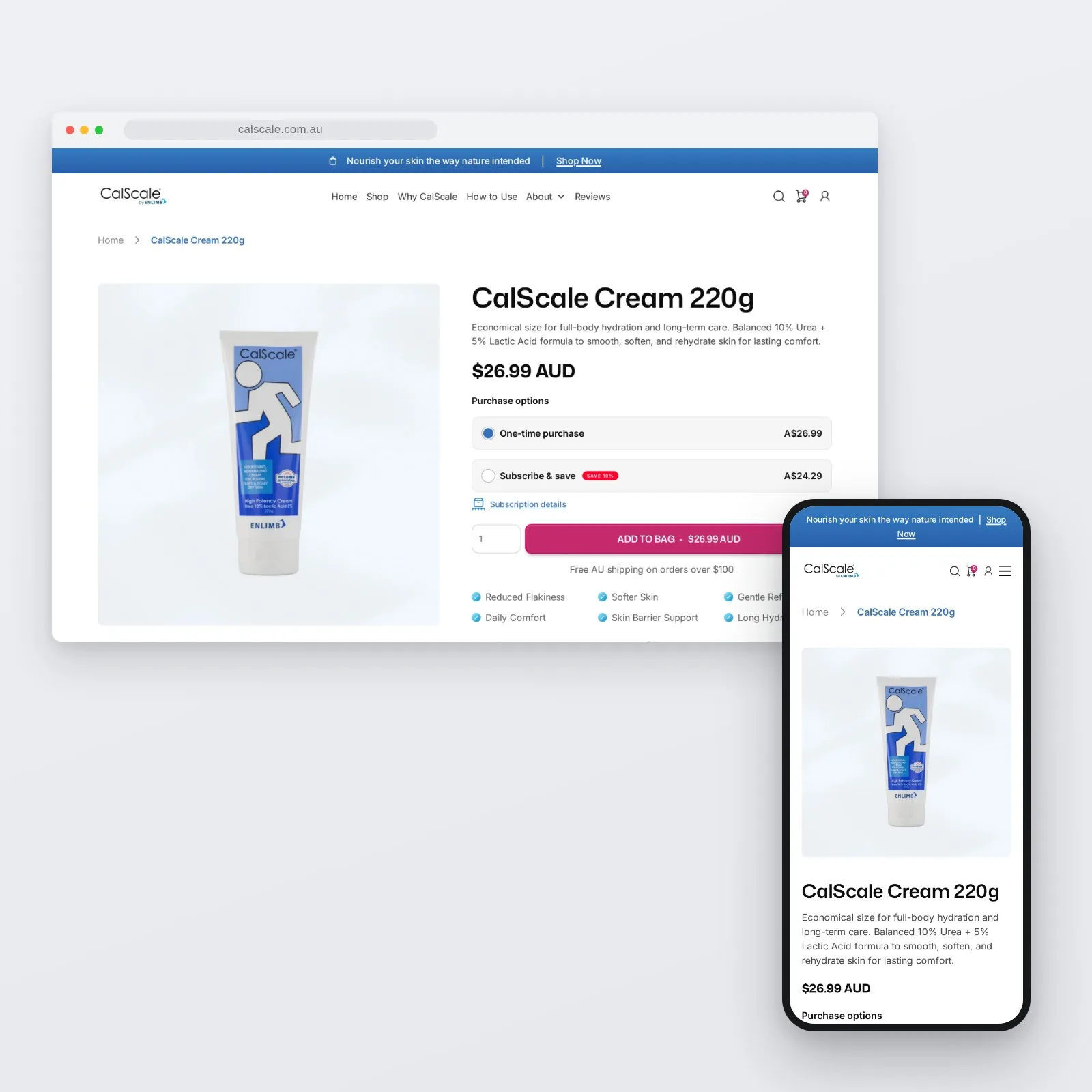
The new website had to sell the cream through a full cart and checkout, with a one-time or subscription choice on each size. It also needed room for the science, the instructions, the stockist list and the questions customers ask, without crowding the page that sells the cream.
Our approach
-
Design
We designed the website in Figma, and the client reviewed and commented on the designs there over several rounds. The Shopify checkout was designed in Figma too, alongside the rest of the site. Designs were signed off on 15 January 2026, before development began.
- The site designed in Figma before build
- The Shopify checkout designed in Figma too
- Design sign-off on 15 January 2026, before development
-
Build
CalScale's Shopify store ran on a stock theme from the Shopify theme store. Pinecone Agency replaced it with a custom theme, built on a separate staging store so the client could review each page while the existing site stayed up.
- Custom Shopify theme, built for the brand
- Built and reviewed on a staging store
- A product page for each size, with a one-time or subscribe and save choice and an Add to Bag button
- Pages for why CalScale, the science, how to use it, stockists, reviews, the brand story, media, FAQ and contact
-
Launch
The new website went live on 23 April 2026.
What came next: Pinecone Agency built CalScale's Klaviyo email flows, covered below.
Timeline
The website, from the last round of Figma designs to launch day.
-
December 2025 to January 2026: design rounds in Figma
The client reviewed and commented on the designs in Figma over several rounds, and we worked their feedback in, including on the Shopify checkout design.
-
15 January 2026: design sign-off
The client signed off the designs, and development began.
-
February 2026: pages built on staging
The site's pages were built on a separate staging store, while the existing site stayed up.
-
6 April 2026: staging review
The staging store was ready for the client to review the whole site.
-
23 April 2026: live
The new website went live on calscale.com.au.
What we built
Each part of the story has its own page, so the product pages can stay focused on the sale.
-
Product pages
One for each size, 100g and 220g, with the price, a choice between a one-time purchase and subscribe and save, and an Add to Bag button.
-
Why CalScale
Sets CalScale beside a regular moisturiser, row by row, from what each is best for to how to apply it.
-
Science
Covers the two active ingredients, urea and lactic acid, and what each one does for dry skin.
-
How to Use
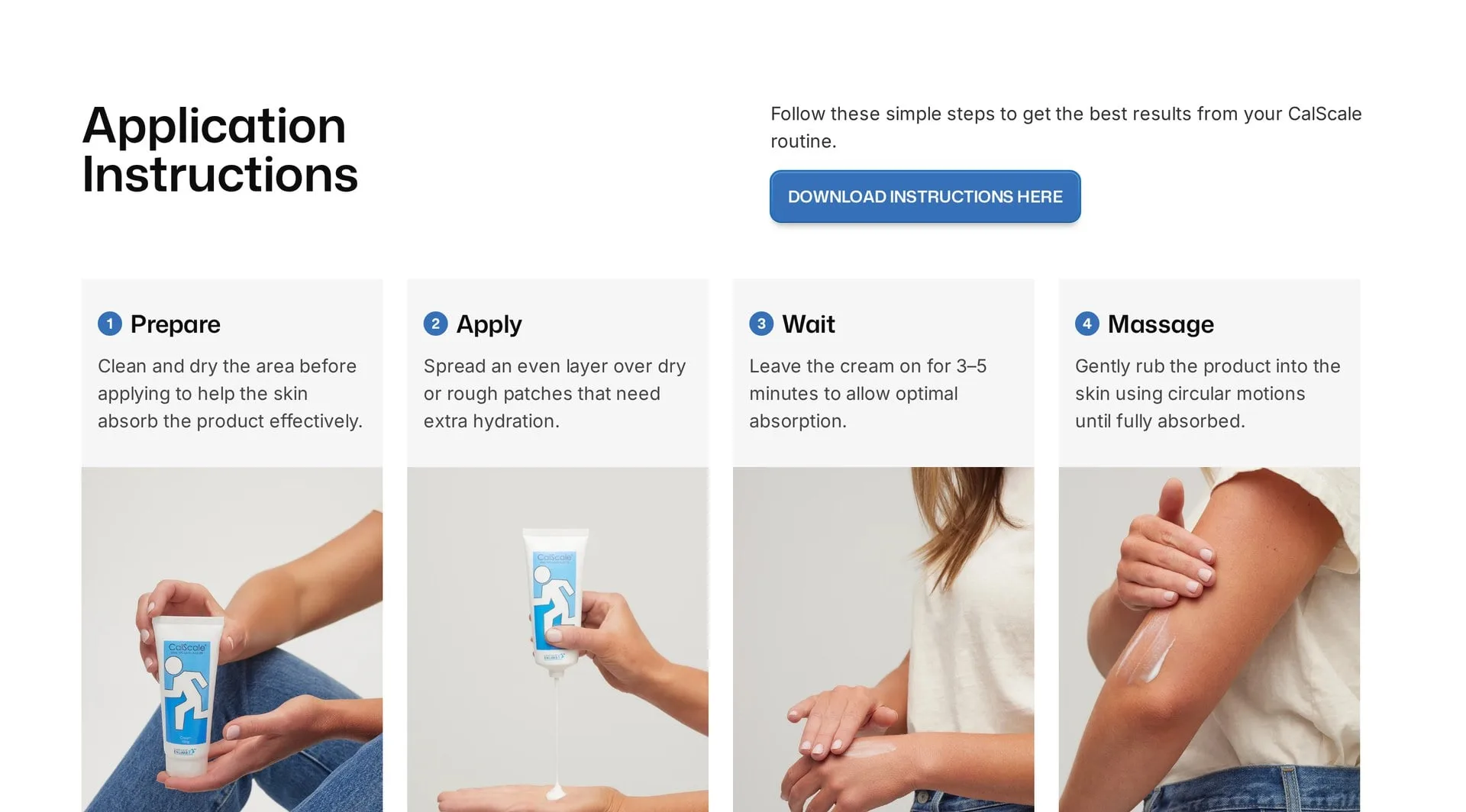
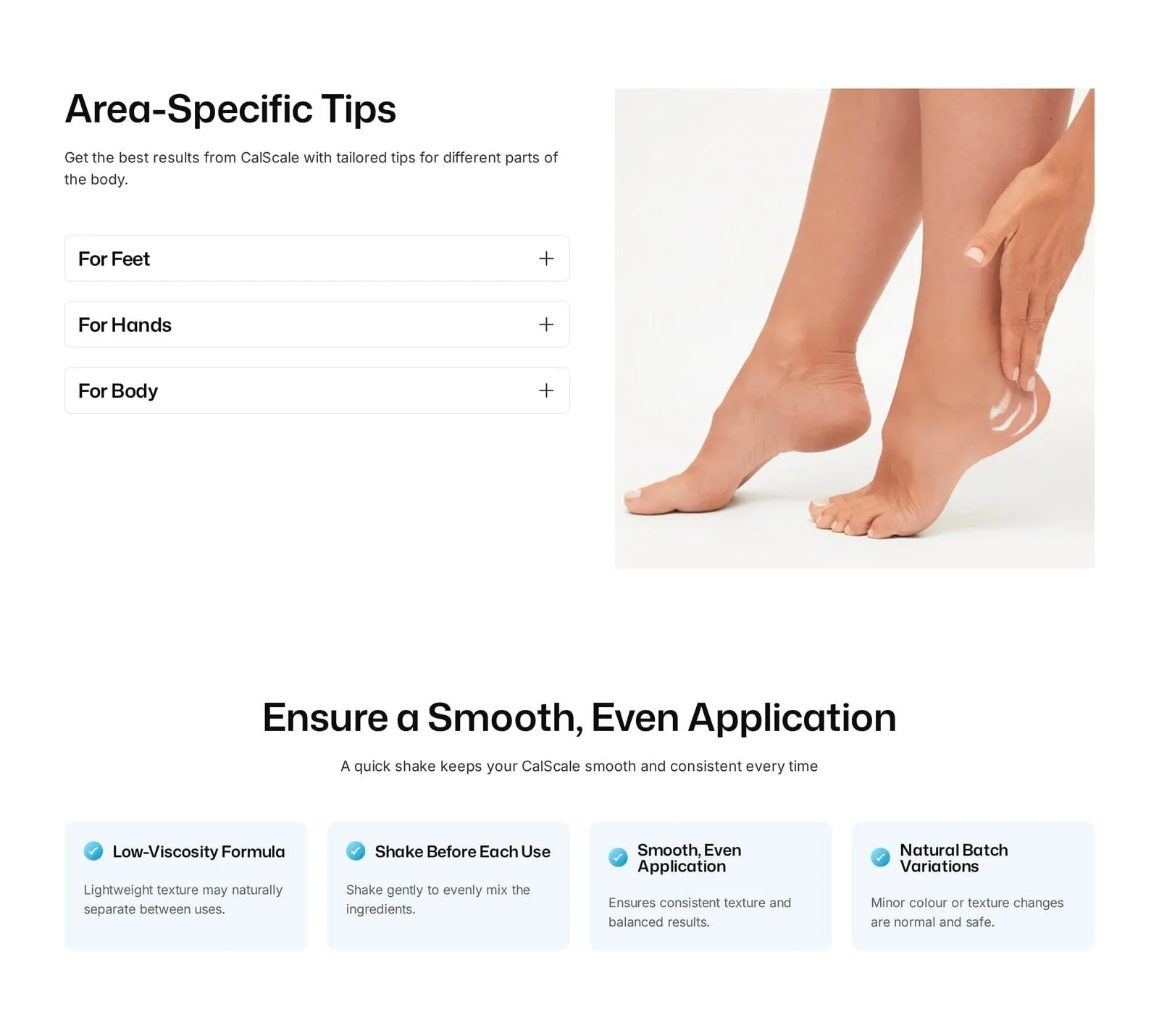
Four application steps, tips for feet, hands and body, and the safety precautions.
-
Stockists
Pharmacies and clinics that carry CalScale, sorted by state, plus online retailers and a contact for anyone who wants to stock it.
-
Reviews
Customer reviews, gathered on one page.
-
FAQ
Questions grouped by topic, from application and safety to ingredients, buying, shipping and storage.
-
Our Story
Why CalScale was created, the brand's mission and values, and the person behind it.
-
Media
A gallery for the brand's media and advertising, with an email for anyone who wants to work with CalScale.
-
Contact
A contact form with enquiry types, from product advice to orders and subscriptions, plus the email and mailing address.
Email flows
CalScale's formula pairs 10% urea with 5% lactic acid, and the brand explains how each ingredient works rather than leaning on adjectives.
A product like that is bought on trust and bought again on results. The brand needed email that would carry the same plain explanation to people after they had found it, without someone sending each message by hand.
-
Structure
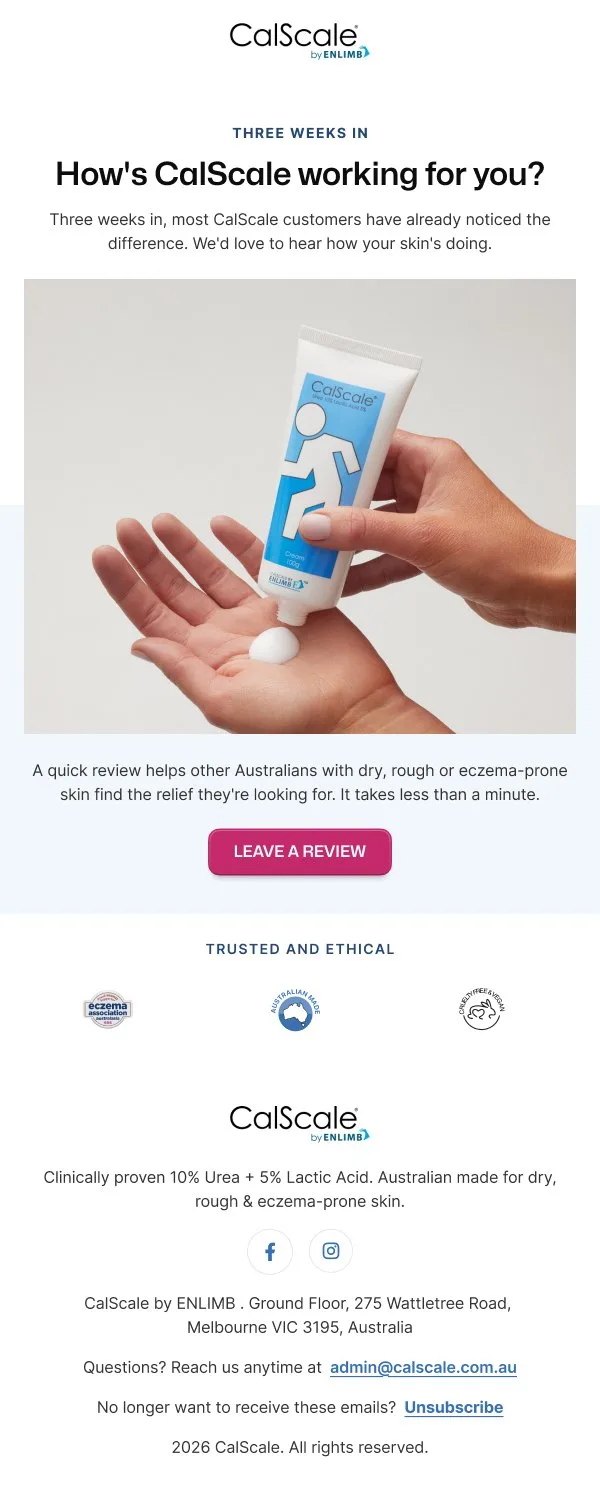
The work was organised as automated flows rather than one-off sends, so each message goes out when a customer reaches the point it is written for.
- Six separate Klaviyo flows, each with its own job
- 20 emails across those flows
-
Build
Every email was built in Klaviyo, ready to run on its own once switched on.
- Flows and emails set up inside the brand’s Klaviyo account
- Live from 18 August 2026

Key takeaway
When a brand sells one product, its website has two jobs: explain it and sell it. Give each its own page and neither gets in the way of the other. Email then repeats that explanation at the right moment. Build the flows once, and they keep doing it.
Let’s build something that works for your business
High-performing websites, AI-powered software and automations, built to scale and evolve with your business.
30-minute call.