Giving an audio studio a website you can hear
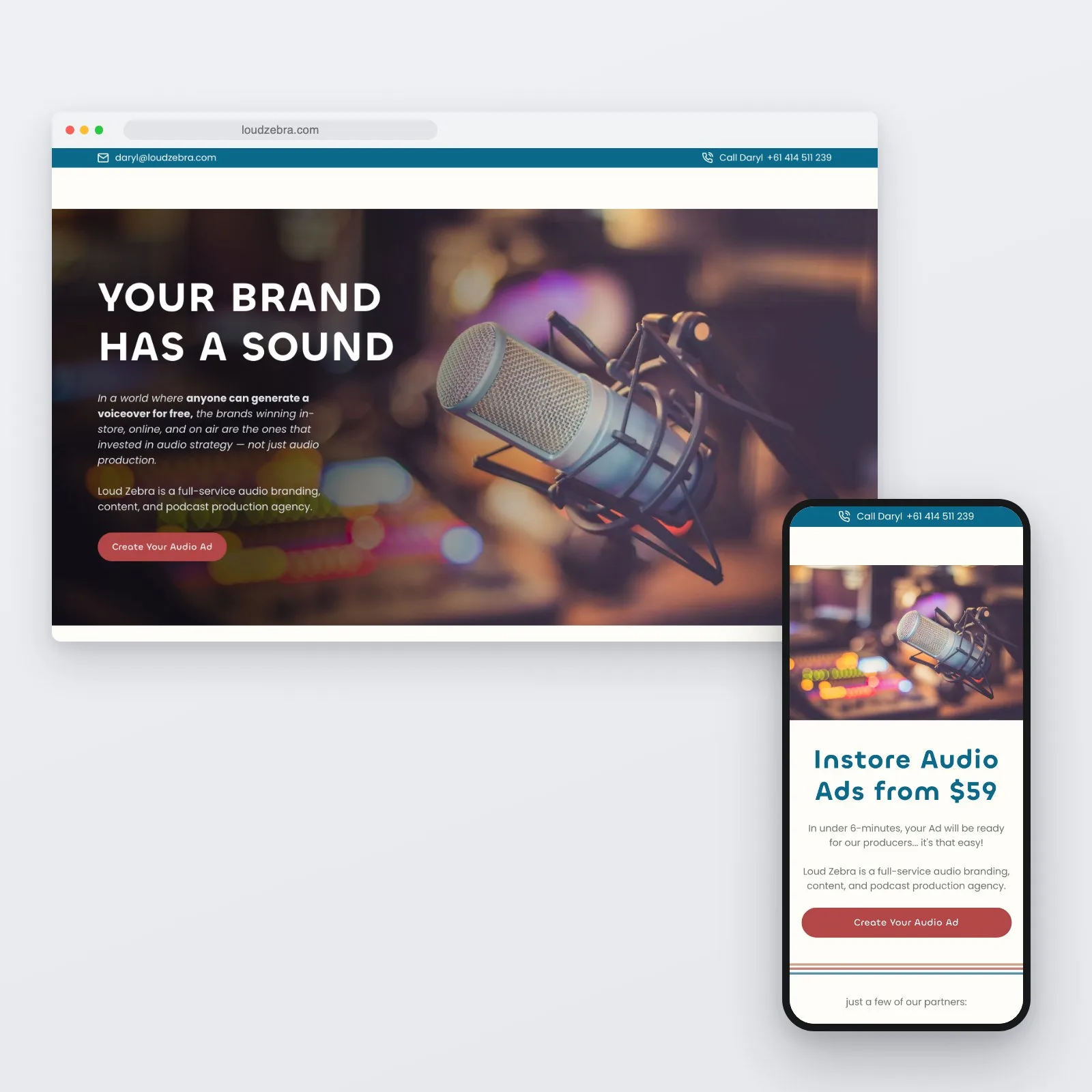
Loud Zebra is an audio branding, content and podcast production studio with credits from major retail brands to internationally awarded podcasts. Audio is hard to sell in silence, so the site is built around listening: channel pages that play the work, and a direct route to ordering.
Overview
The challenge
An audio studio's portfolio does not screenshot. Loud Zebra had the kind of client list most studios would kill for, household retail names, government campaigns, podcasts with international awards, and no website doing it justice.
The catalogue was also broad enough to confuse: in-store audio, on-hold messaging, audio ads, podcast production, sound for television and cinema. Presented as one long list, every service dilutes the others. Each channel has a different buyer with a different budget, from a national brand commissioning sound design to a shop owner who needs an ad this week.
Our approach
-
Strategy
A page per channel, so each buyer lands on their own problem.
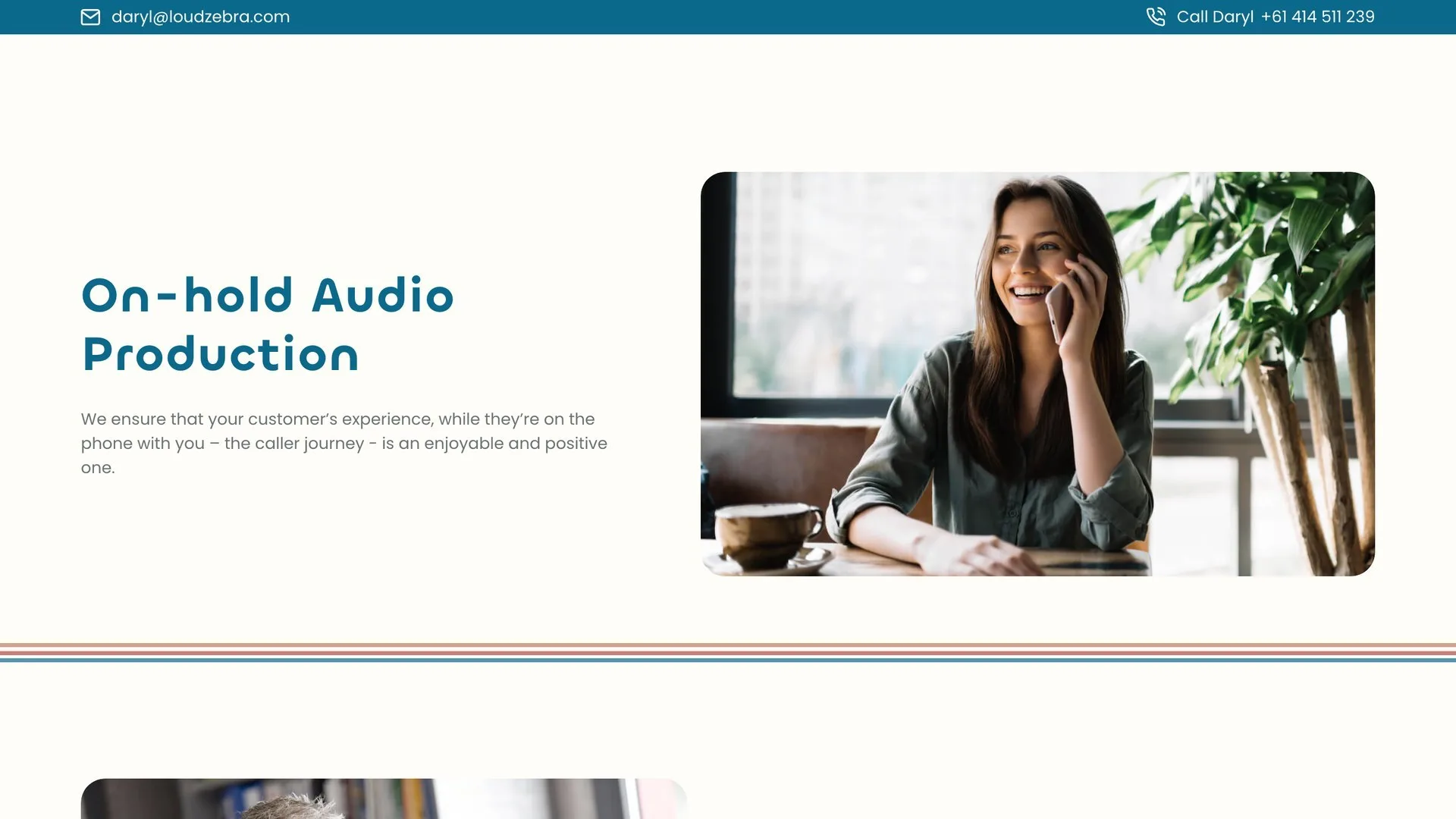
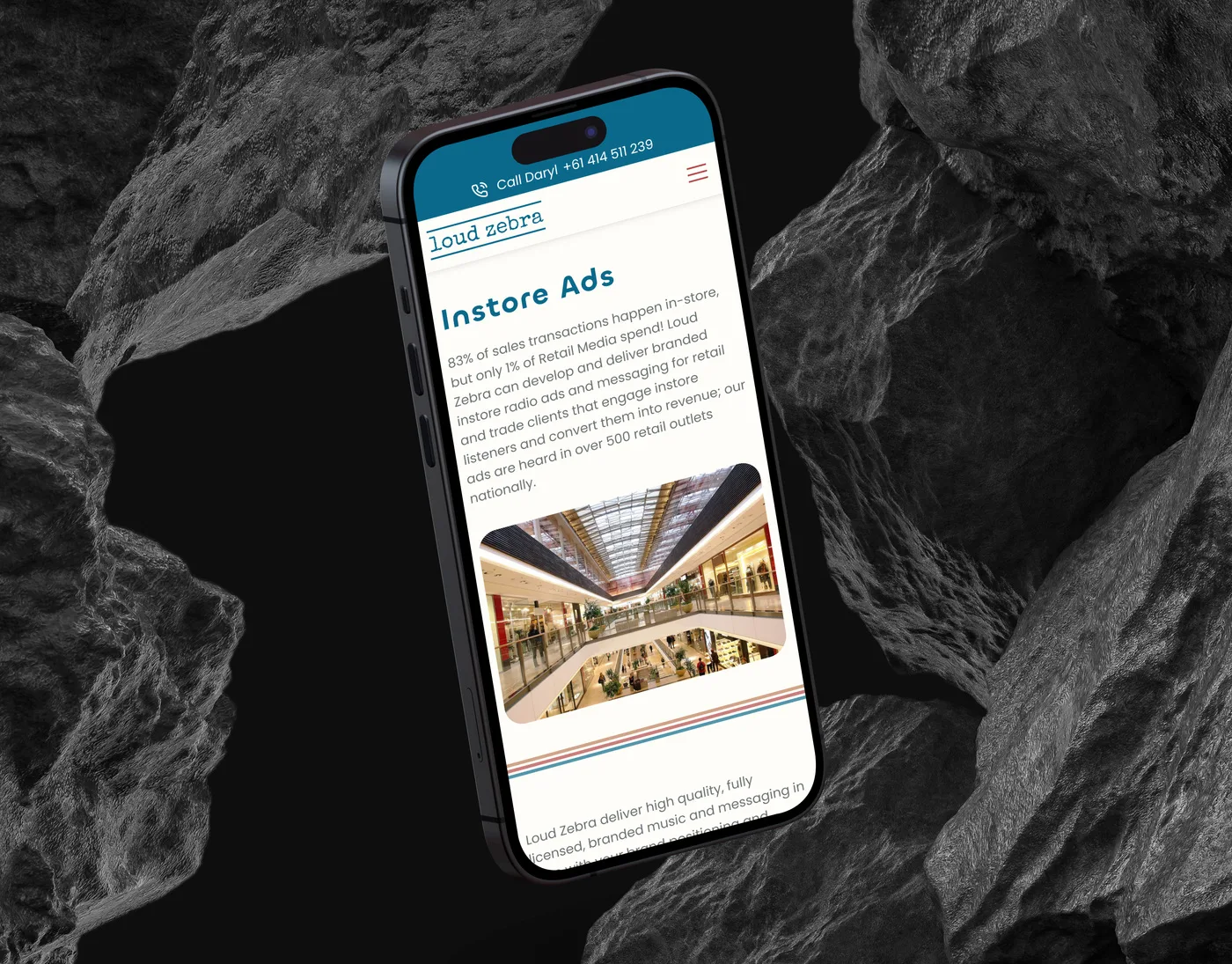
- Dedicated pages for in-store, on-hold, podcast, radio, television, cinema and streaming audio
- The client logo wall up front, because the credits are the shortcut to trust
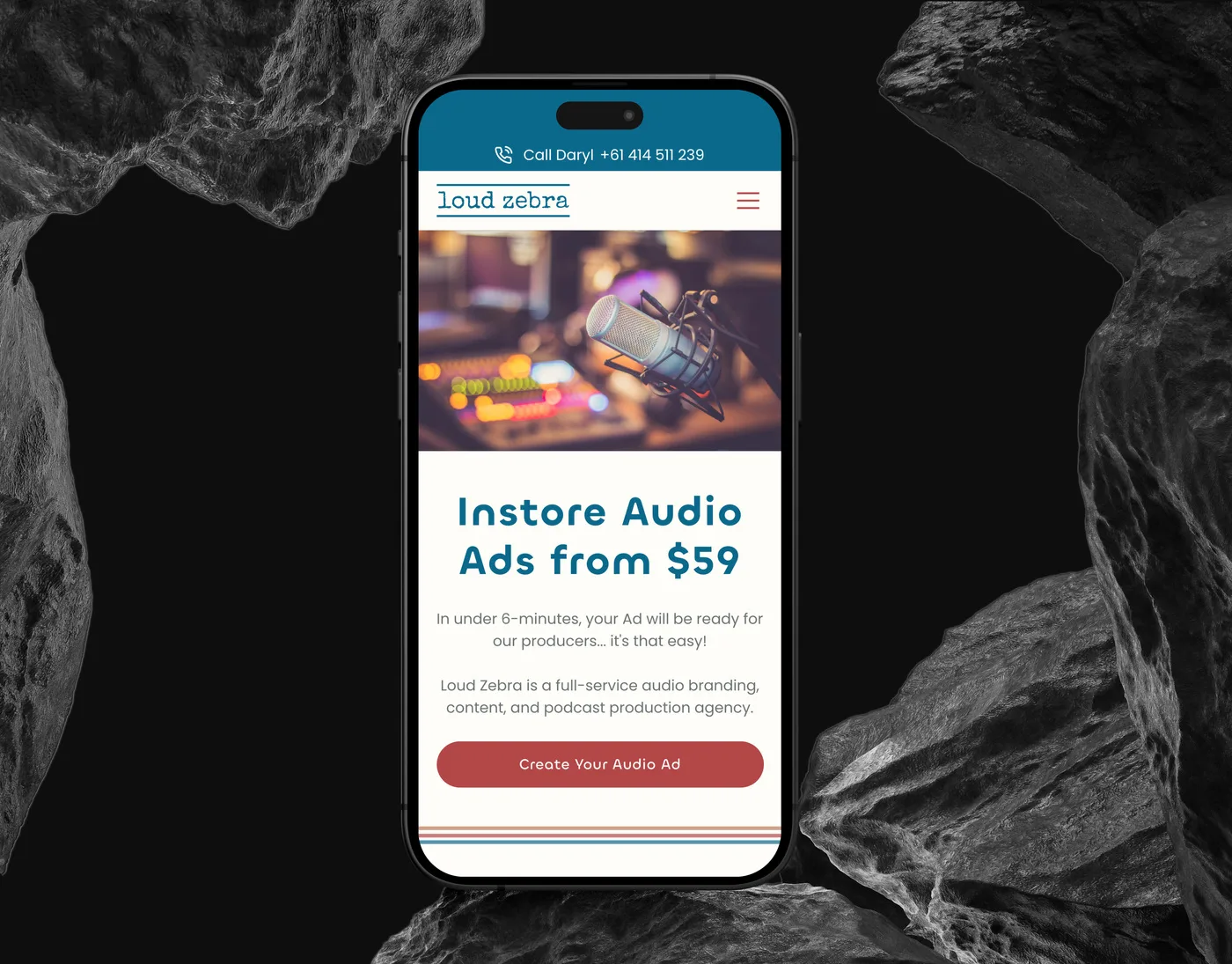
- Productised entry points for the small fast jobs, direct contact for the big ones
-
Design
Loud where the brand is loud, quiet where the work needs to play.
- A bold, high-energy identity befitting the name
- Embedded players as the core content unit, credited to real clients
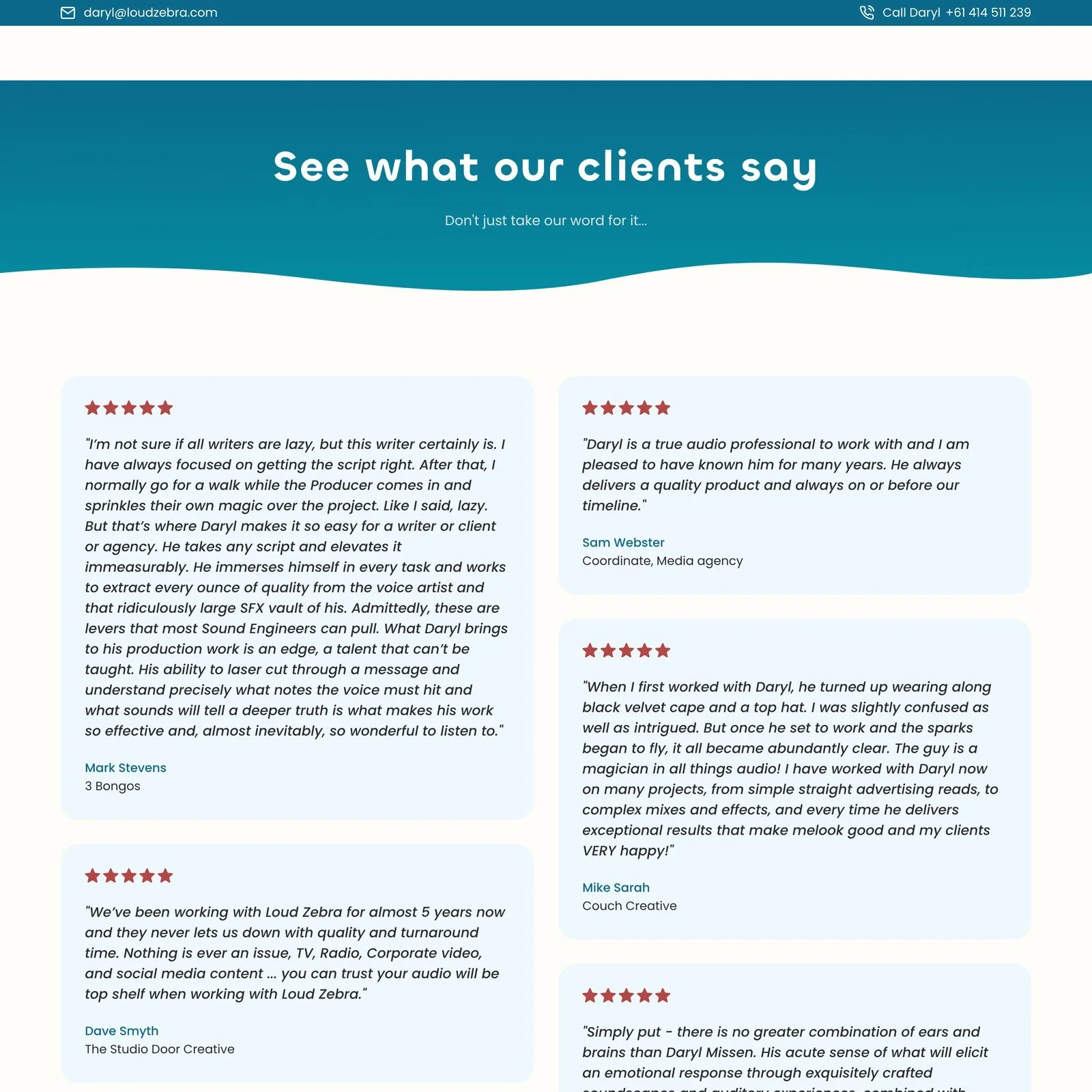
- Testimonials from named hosts and producers gathered on their own page
-
Development
A Webflow build that treats audio as a first-class citizen.
- Audio embeds across service pages without wrecking load times
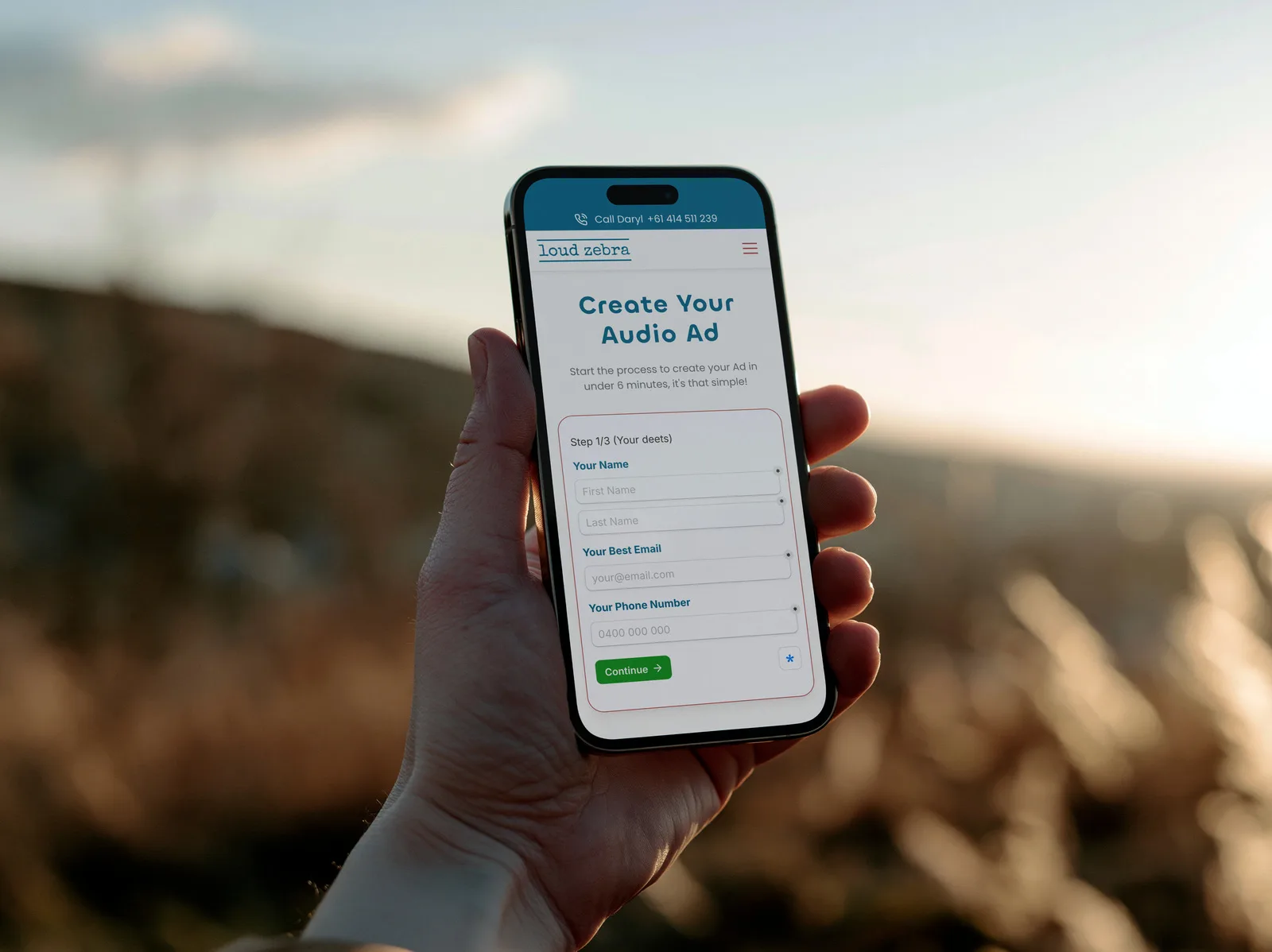
- An ad-ordering path where a client can brief a job in minutes
- Simple service architecture that new channels slot into
Technical deep-dive
-
A portfolio you listen to
Every claim on the site is one press of play from its evidence.
- Real campaign and podcast audio embedded per service page
- Work credited to the brand or programme it was made for
-
Two front doors, deliberately
A national sound-design brief and a quick radio ad should not share a form.
- Fast, structured ordering for productised audio ads
- Direct contact with the producers for branded and broadcast work
-
Channel pages that match searches
People search for the specific thing: on-hold messages, in-store radio, podcast production.
- One indexable page per channel, titled the way buyers search
- Service copy that answers the practical questions before the phone call
Results and impact
Counted on the live site, with homepage scores from Google PageSpeed Insights, on 9 October 2026. We publish no traffic or lead figures.
- 6
Channel pages with the work embedded
In-store, on-hold, Spotify, podcast, radio and online video, each page carrying the studio’s own work to play.
- 96
Desktop performance score
Google rates anything from 90 as good. Measured on the live homepage.
- 100
Accessibility, best practices and SEO
Full marks in all three of Google’s automated checks, on phone and desktop alike.
The studio's website finally sounds like the studio. A visitor hears real work within seconds of arriving, finds their own channel without wading through everyone else's, and can either brief a quick job on the spot or start a conversation about a big one.
The build has kept pace with the business since launch, carrying new offers and positioning on the same architecture, which is what a service site is supposed to do.
Key takeaway
If the product is sound, the website's job is to get out of the way of the listening. A page per channel, real credited audio on each, and an ordering path sized to the job turned a word-of-mouth studio into one a stranger can evaluate and hire in one visit.
Let’s build something that works for your business
High-performing websites, AI-powered software, and automations — built to scale and evolve with your business.
30-minute call · no obligation