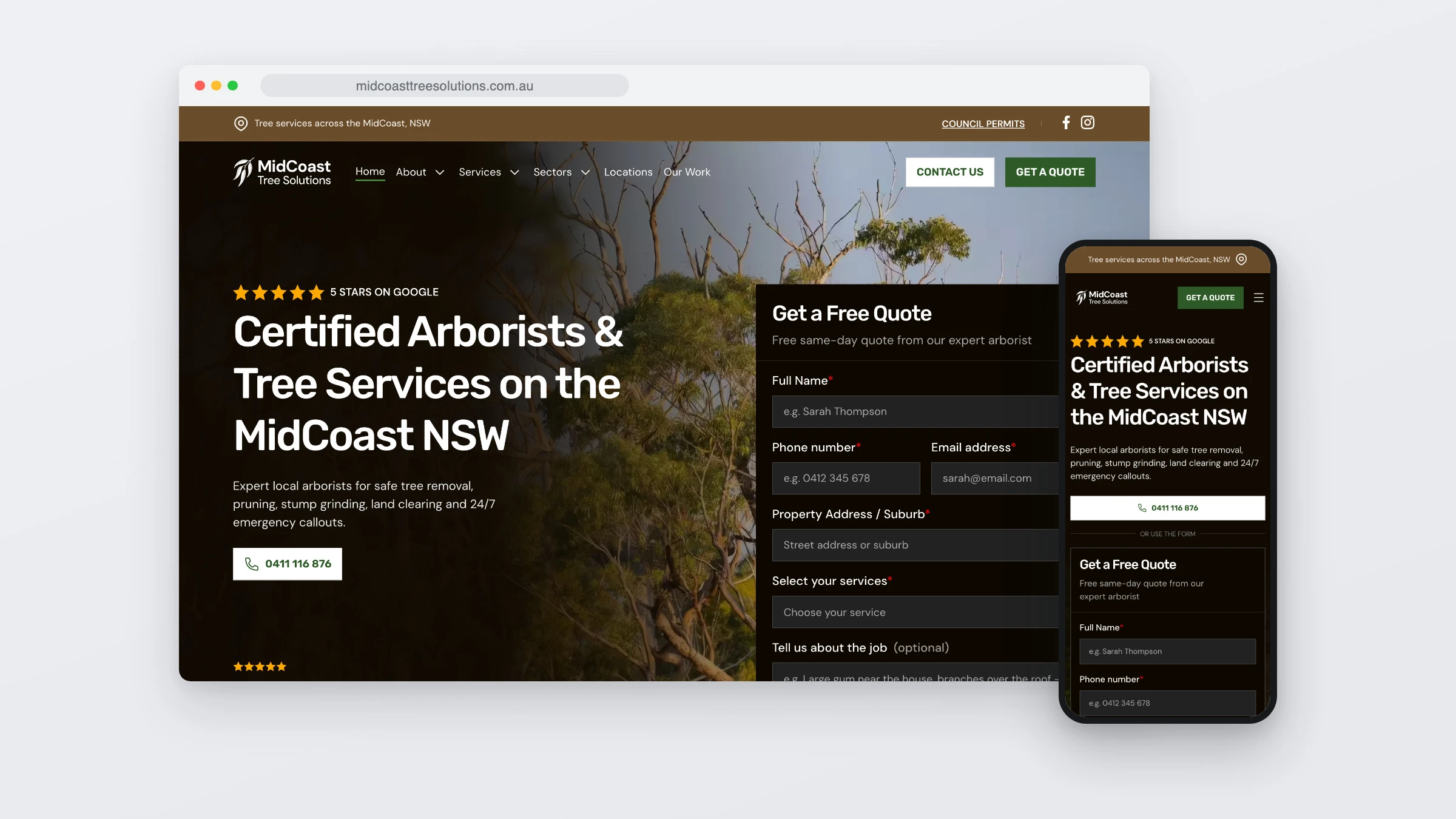
Building a contractor’s site that wins local searches suburb by suburb
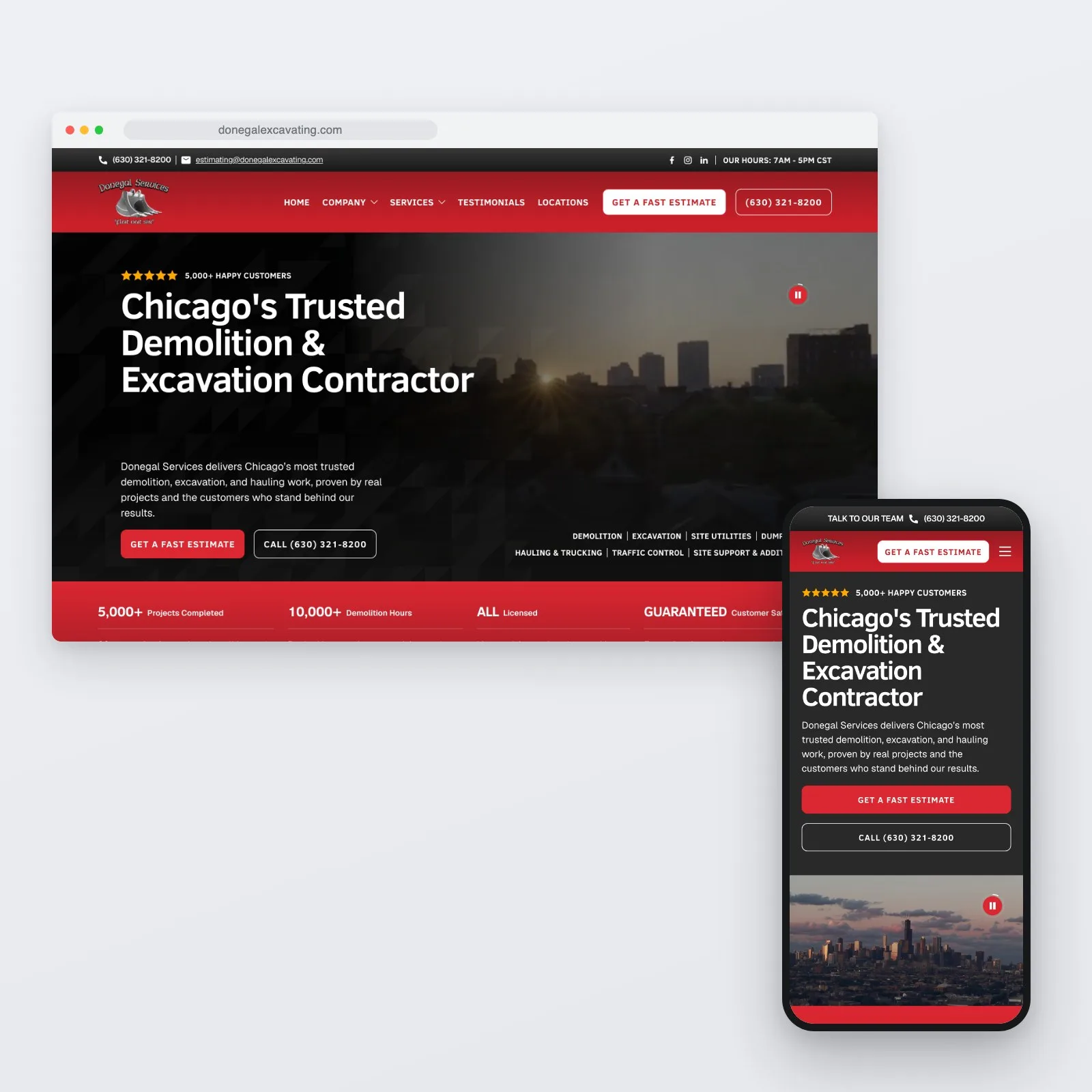
Donegal Services has run demolition, excavation and hauling across Chicagoland since 2005, and its website said none of it with any force. We rebuilt it in Webflow around services, service areas and projects, all interlinked, all run by the team, and structured for search and AI assistants.
Overview
The challenge
Donegal Services came to us in October 2025 with a website working against the business. Twenty years of demolition, excavation and hauling work read as generic, because the site that presented it was dated, confusing to move through, and thin on proof.
The structural problem mattered most. A contractor like this is hired locally: someone in Naperville searches for a demolition contractor in Naperville, not in general. The old site had no way to answer that search, no clear pages for each service, and no project evidence to back its claims.
Updating it was also a developer job. Adding a completed project or a new service area meant waiting on someone technical, so the site fell further behind the business with every job finished.

Our approach
-
Strategy
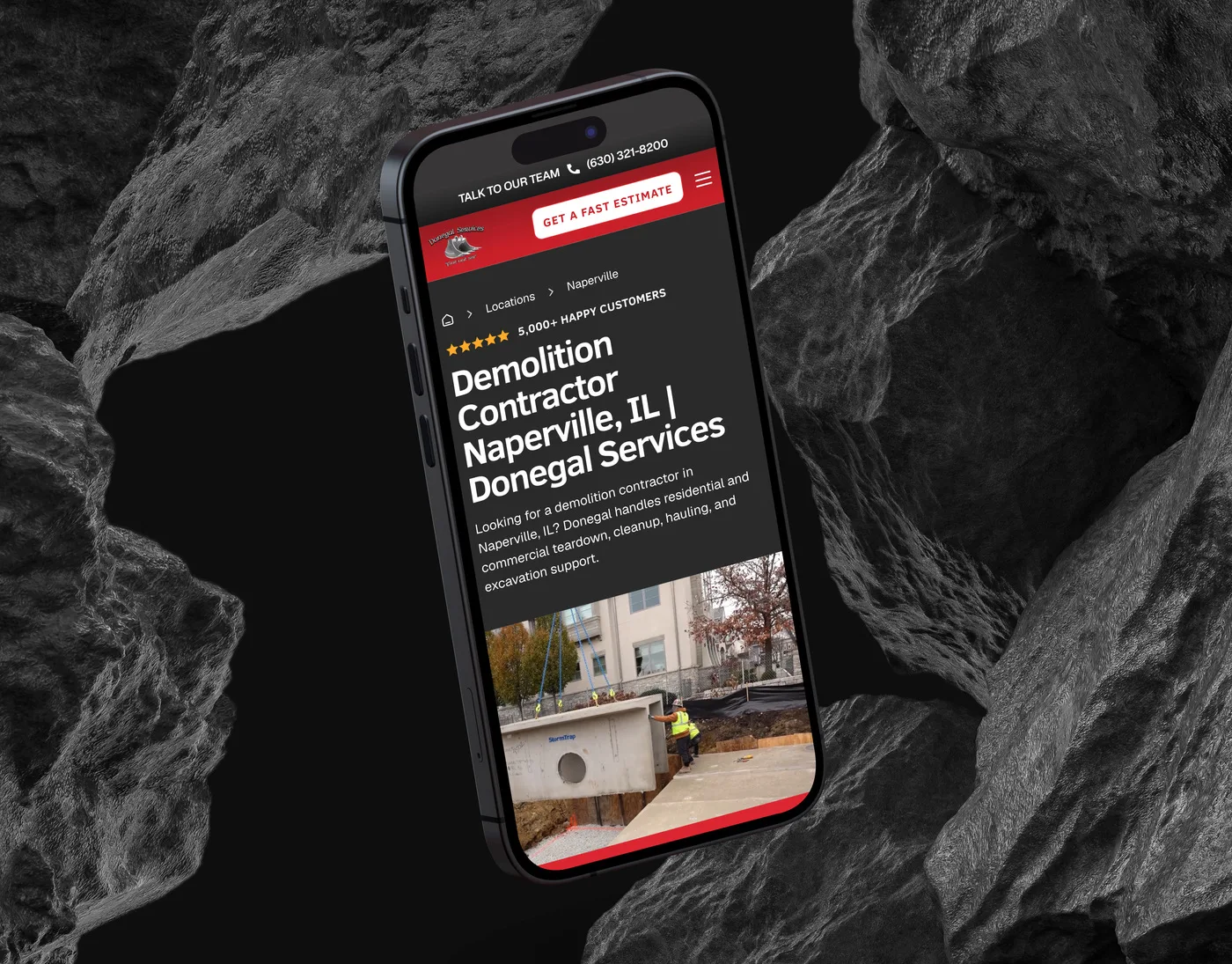
The architecture is the strategy: services, service areas and projects as three interlinked CMS collections, each answering a different search.
- Seven service pages, from demolition and excavation to dumpsters and heavy haul
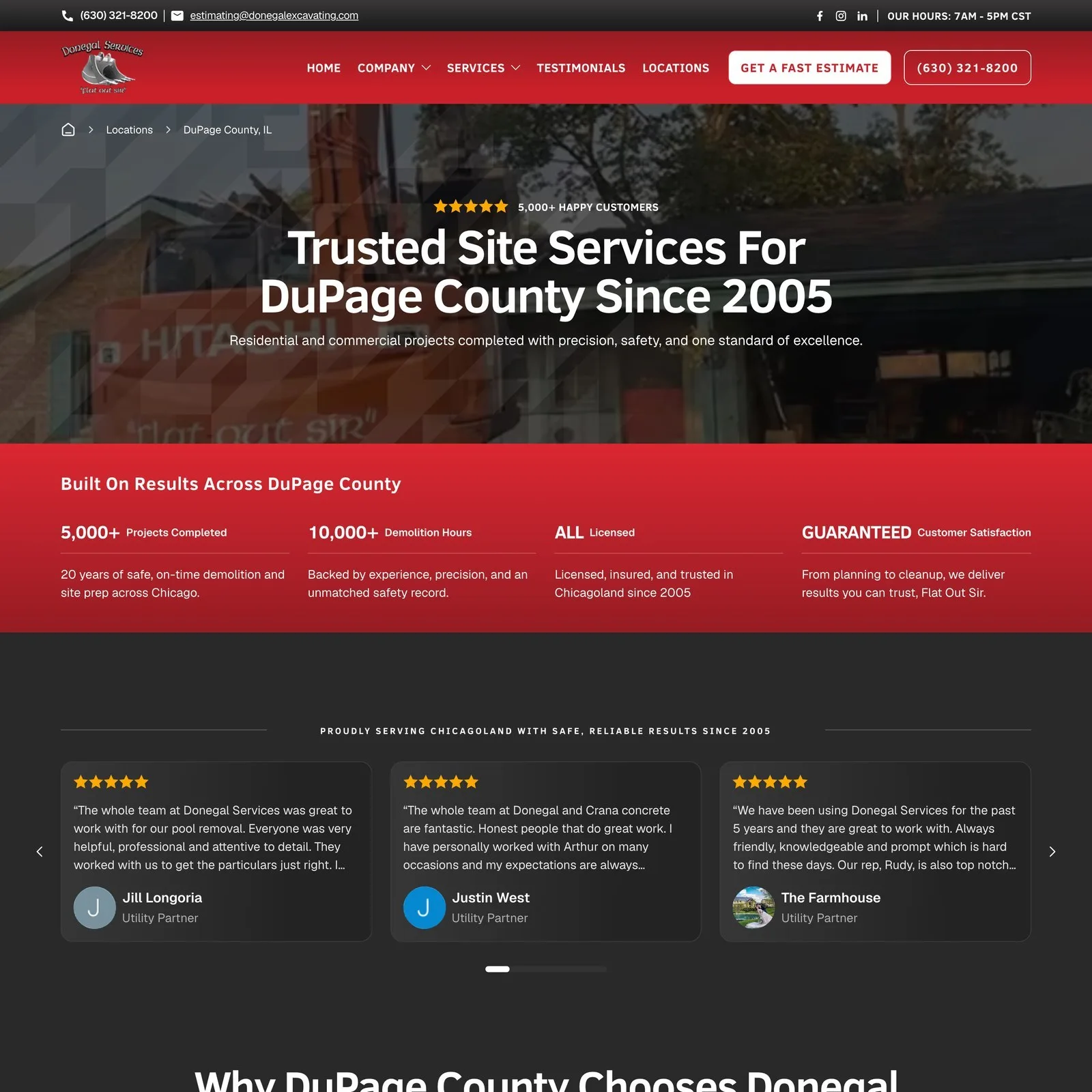
- Seventeen service-area pages covering the counties and suburbs the crews actually work
- Real project write-ups linked from the services and suburbs they happened in
-
Design
Built to look like the work: heavy, precise and safe.
- Real job photography rather than stock machinery
- Estimate requests treated as the primary action on every page
- Mobile-first, for the person standing on a site that needs clearing
-
Development
A Webflow build the team can run without us.
- CMS collections for services, projects, locations and testimonials
- Client-first class naming, so future developers inherit a maintainable build
- A recorded training walkthrough at handover
Technical deep-dive
-
Local SEO as page architecture
Each suburb page is a real page about real work there, not a template with the town name swapped.
- Seventeen service-area pages, each linking the services and projects relevant to it
- Structured data on every layer: local business, service catalogue, and per-area pages
- Five-star review markup carried from the business’s own Google reviews
-
Structured for AI answers as well as search
Buyers increasingly ask an assistant instead of a search box, so the site speaks that format too.
- A plain-text llms.txt describes the business directly to AI assistants
- It states the facts and explicitly tells models not to invent credentials
- Schema markup gives the same answers to traditional search engines
-
Projects as living proof
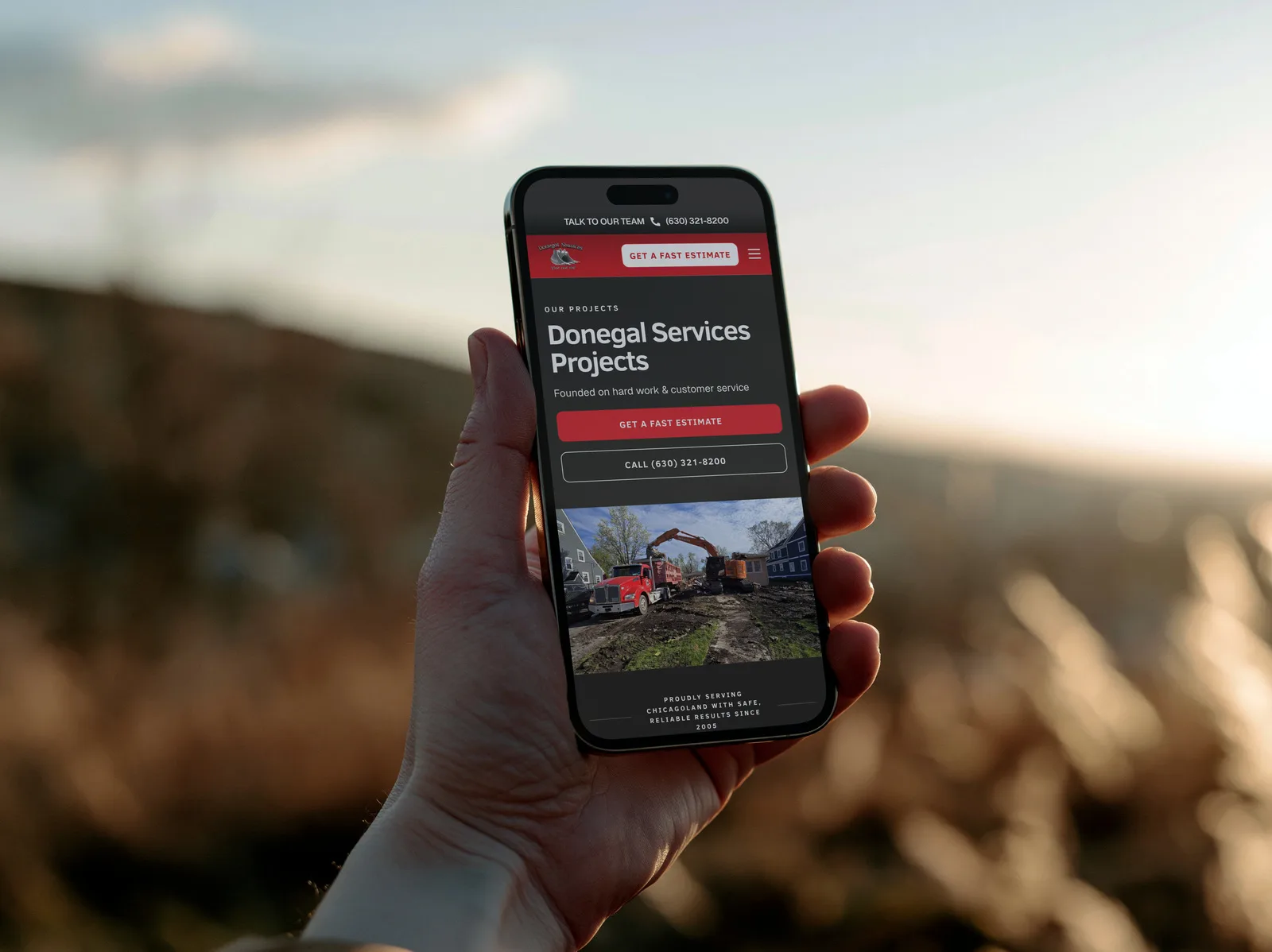
Completed jobs are the strongest sales content a contractor has, so publishing one is now a form, not a project.
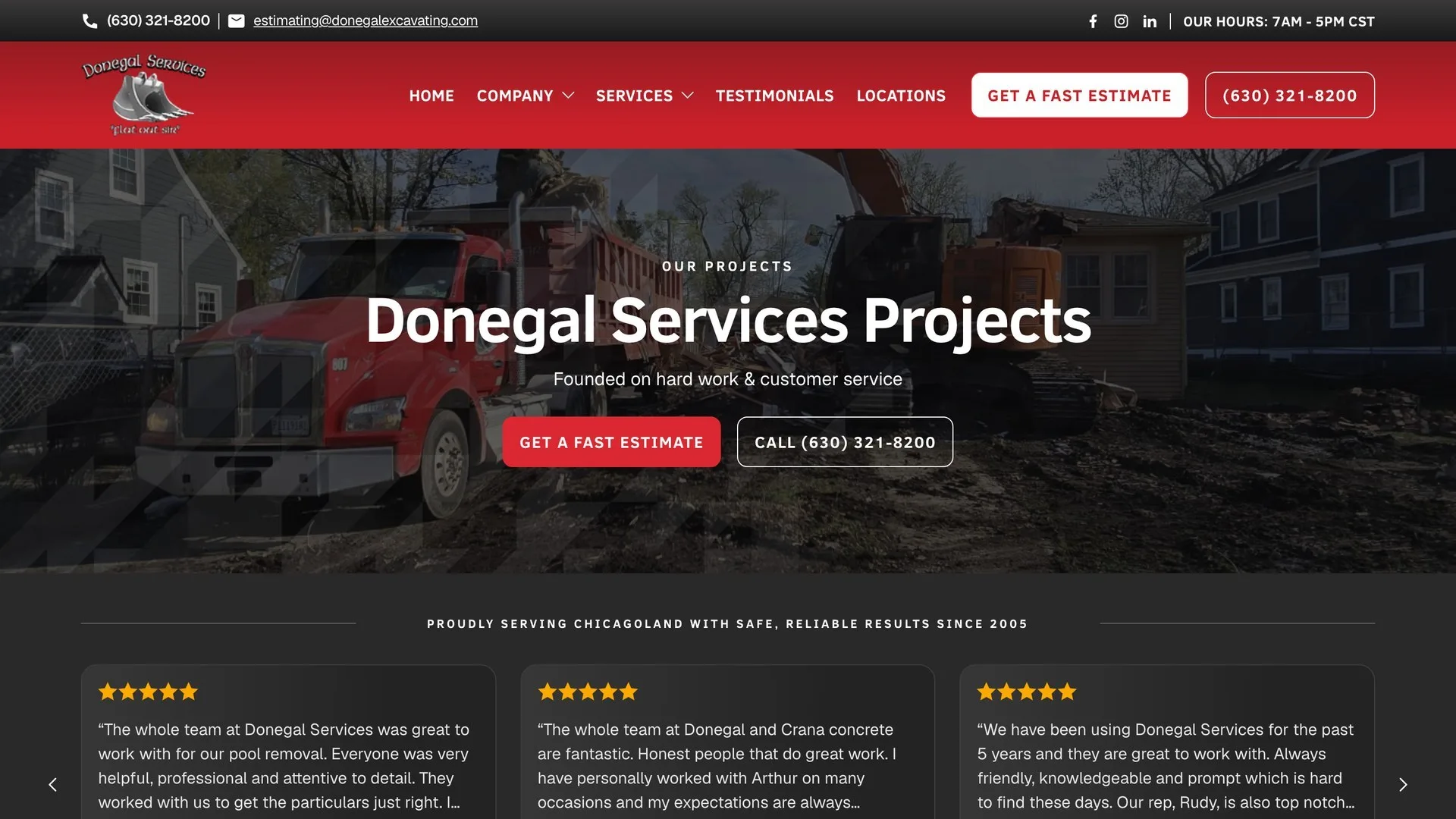
- Twenty-four project write-ups at launch, from home demolitions to storm sewer works
- Each project links back to its service and its suburb, feeding the local pages
- The team adds new projects through the CMS without touching layout
-
One estimate path everywhere
Every page ends the same way: a fast estimate, scoped by project type.
- The estimate form asks the project type up front, so enquiries arrive pre-sorted
- Phone and email routes stated plainly for people who would rather call
Results and impact
Counted from the live sitemap, with homepage scores from Google PageSpeed Insights, on 9 October 2026. We publish no traffic or lead figures.
- 17
Service-area pages
Each county and suburb the crews serve has its own page, linking local projects and services, so nearby searches land somewhere specific.
- 24
Project write-ups
Real jobs with locations in the titles, published by the team through the CMS as work completes.
- 100
Accessibility and SEO scores
Full marks on Google’s automated accessibility and SEO checks, on phone and desktop alike.
The site now matches how this business is actually hired. A search from a suburb the crews serve lands on a page about that suburb, with the right services and nearby projects one click away, and an estimate form at the bottom of all of it.
Just as importantly, the team owns the content. New projects and new service areas are CMS entries, so the site grows with the job list instead of trailing it.
Key takeaway
For a local contractor, the site architecture is the SEO. Donegal Services did not need clever content. It needed a page for every service, a page for every suburb, and proof wired between them, in a CMS the team can keep feeding. Doing that with structured data for search engines and a plain-text version for AI assistants covers how people find a contractor now, and how they will next year.
Let’s build something that works for your business
High-performing websites, AI-powered software, and automations — built to scale and evolve with your business.
30-minute call · no obligation